

Choosing a capacitor for a low-pass filter resistor-capacitor circuit involves more than just picking a microfarad value. The resistor and capacitor together determine the cutoff frequency. Other elements such as tolerance, voltage rating, temperature stability, ESR, and ESL also affect performance. This guide describes useful selection steps. It avoids treating one value as suitable for every situation.
An RC low-pass filter allows slower signal changes. It reduces higher-frequency parts at the same time. Engineers use it in sensor conditioning, control inputs, audio paths, communication circuits, and noise-reduction networks. The resistor sits in series with the signal. The capacitor supplies a frequency-dependent path to ground.
The resistor controls current. It works with the capacitor to set the time constant. The capacitor changes impedance based on frequency. It shows higher impedance to slow changes. It presents lower impedance to faster changes. High-frequency signals face stronger attenuation. Lower-frequency content stays at the output. Source and load impedance also influence the effective resistance.
The ideal RC cutoff frequency is commonly expressed as:
`fc = 1 / (2πRC)`
The above relationship explains the reason why the choice of the capacitor value of a low pass filter cannot be done independently. With the same resistor value, higher capacitance will give a lower cut off frequency while lower capacitance will give a higher cut off frequency. Now, proceed to source and load.
Begin capacitor selection with the target frequency response. Then consider electrical stress, environment, and implementation details. A nominally correct capacitance may still perform poorly. This happens if its tolerance, temperature behavior, or parasitic parameters are not suitable.
Capacitance value directly affects the RC time constant and frequency response. Capacitance tolerance moves the actual cutoff frequency away from its nominal point. Tight tolerance helps when channels must match, or the cutoff point is critical. A wider tolerance may work in noise-suppression circuits. These circuits often have enough frequency margin.
The capacitor voltage rating should offer margin above continuous voltage and expected transients. A rating too close to operation increases stress. Temperature stability matters. Dielectric behavior and capacitance can change across the operating range. Check ambient temperature, self-heating, nearby heat sources, and derating needs.
Capacitor ESR adds loss. It can create voltage drop or heat under ripple current. Capacitor ESL adds inductive behavior. This becomes more visible as frequency rises and reduces effectiveness at high frequency. These parasitic parameters influence transient response and damping. See this capacitor ESR impact on low-pass filter performance.
The best capacitor type depends on capacitance range, frequency, leakage, bias behavior, pulse or ripple stress, space, and cost. Ceramic, film, and electrolytic capacitors can all be useful. They solve different selection needs.
The use of ceramic capacitors is advisable if the circuit requires smaller dimensions and low inductance, along with high-frequency filtering. These are suitable for use in many small-signal and digital circuits to suppress noise. Nevertheless, the capacitance value varies depending on the DC bias, temperature, and type of dielectric used.
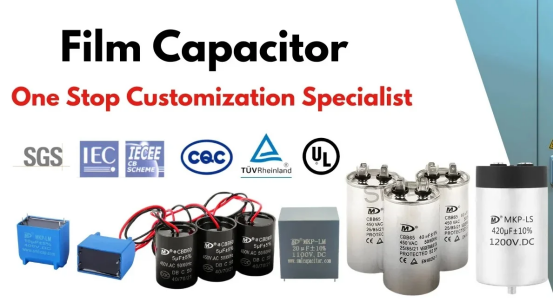
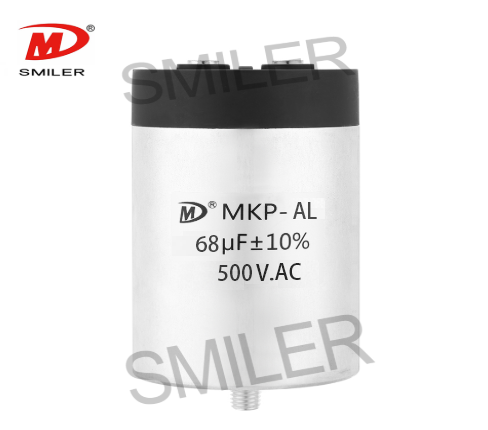
Film capacitors are often considered when stable capacitance, low loss, and predictable behavior matter more than the smallest package. Metallized polypropylene film is relevant to filtering. It can provide low loss and a self-healing property. Long lifetime is listed for appropriate product families. The AC Filter Capacitor MKP-AM is listed for output AC filtering in power converters, UPS, and motor drives.
SMILER capacitor has over 15 years of film capacitor expertise. We support customization with a low MOQ. Automated production lines are designed for efficiency, precision, consistency, and quality control. The final part still has to match the circuit's voltage, frequency, capacitance, tolerance, thermal, and lifetime requirements.
Electrolytic capacitors suit designs needing relatively large capacitance for low-frequency ripple smoothing. They work with acceptable polarity and lifetime constraints. They may have higher leakage, wider tolerance, and stronger temperature or aging effects than some film alternatives. They are not automatically best for a precision RC signal filter or high-frequency network.
Random capacitor selection can move the cutoff frequency far from the target. Ignoring the RC relationship may attenuate wanted signal content. It can also allow too much noise through. Start with the desired response. Then calculate a practical resistor-capacitor range before comparing parts.
Capacitance alone does not describe filter behavior. Check voltage rating, tolerance, temperature stability, ESR, ESL, leakage, insulation, ripple current, and package dimensions. In higher-frequency circuits, layout and lead length can matter as much as nominal capacitance.
The operating environment includes temperature, frequency, electrical stress, humidity, vibration, and cooling. A part that works on a bench may drift or heat in an enclosure. Confirm duty cycle and transients. Avoid selecting by capacitance and price alone.
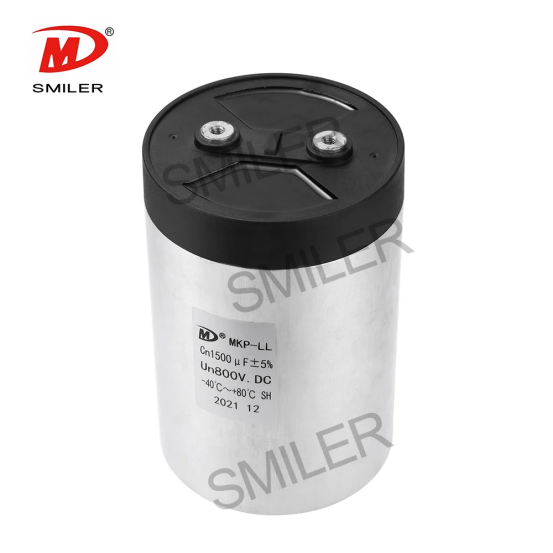
Balance the pair against the actual operating context. For film-filtering designs, compare metallized polypropylene film, low ESR, low self-inductance, self-healing property, ripple-current handling, current-impact capability, heat dissipation, high reliability, and long lifetime. These are component-level characteristics. Verify the actual circuit before final selection.
Application context separates the relevant families. Approved filtering applications include AC/DC filtering, output AC filtering for power converters, UPS, EV or HEV transportation, renewable-energy inverters, motor drives, and welders or inverter welding machines. Match the application to the relevant product family. Verify the design requirements.
SMILER capacitor's film-capacitor capability includes over 15 years of expertise, low-MOQ customization, and automated production lines designed for efficiency, precision, consistency, and quality control. These capabilities support manufacturing options. They do not replace circuit-level verification.
RC filters are common in sensor, communication, and control circuits. They can reduce high-frequency noise before an analog-to-digital converter. They smooth feedback or limit switching content. Choose the capacitor for bandwidth, source impedance, tolerance, and environment.
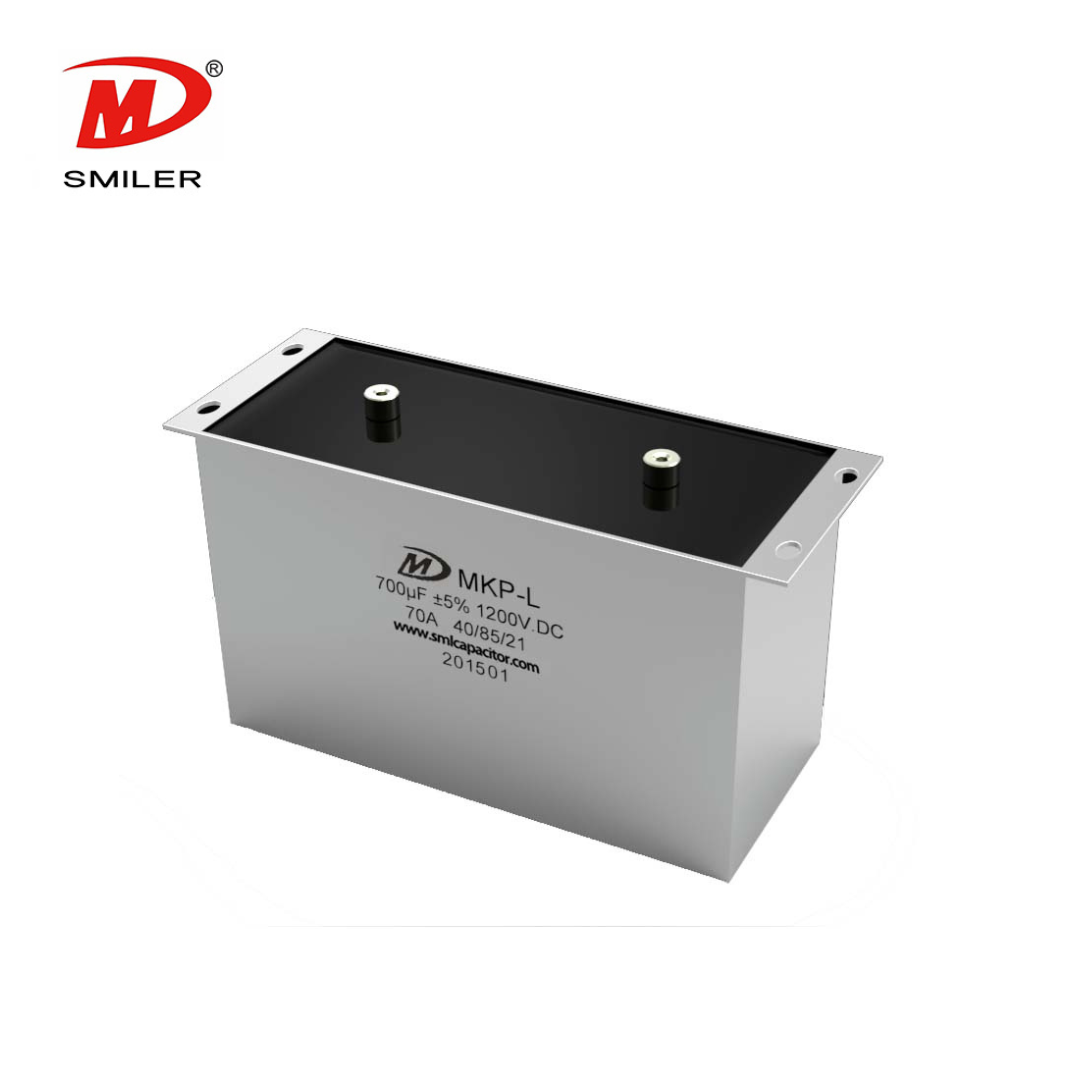
Power filters face higher current, voltage, thermal, and transient demands than many signal filters. Relevant film capacitor families are listed for AC/DC filtering, UPS, EV or HEV systems, renewable-energy inverters, motor drives, and inverter welding machines. The DC-Filter Capacitor MKP-LS is listed with low self-inductance, low equivalent series resistance, and current-impact capability. Verify actual design stress and mounting requirements.
A: Begin by using the target cutoff frequency. Combine it with the resistor value. Next, examine tolerance. Pay attention to the voltage rating as well. Temperature stability needs review too. Look at ESR and ESL together. Also consider leakage, package, and real duty. No single capacitor fits every RC filter.
A: The correct value relies on the resistor value. It also relies on the target cutoff frequency. Take source impedance into account. The load conditions matter too. Tolerance and parasitic effects need consideration. Available standard values are important as well.
A: Yes. Ceramic, film, and electrolytic capacitors show clear differences. These appear in effective capacitance. They also vary in ESR, ESL, leakage, temperature stability, frequency behavior, and lifetime. Choose the type based on the signal or power-filtering duty.
A: ESR produces loss. It leads to voltage drop and heat at the same time. This parameter can alter damping. It affects high-frequency response too. Low ESR sometimes helps in certain circuits. The suitable value relies on ripple current. It depends on frequency, stability, and the rest of the network.
A: Yes. Film capacitors work well for stable filtering. They offer low loss in these applications. They maintain predictable capacitance. They provide self-healing behavior. They support a long lifetime. These features prove useful. Confirm the voltage first. Then check capacitance, tolerance, temperature, size, and frequency requirements for the actual circuit.
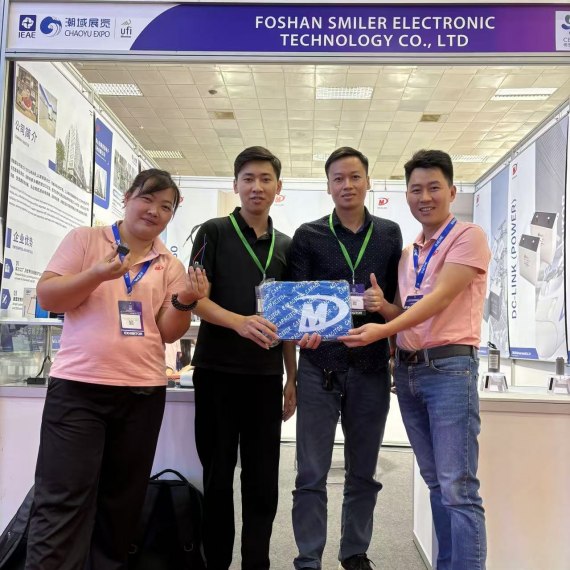
2024 VIETNAM INTERNATIONAL ELECTRONICS & SMART APPLIANCES EXPO
Exploring How AC Capacitors and DC Capacitors Function Differently
Understanding Snubber Capacitor: RC vs. RCD Snubber Differences
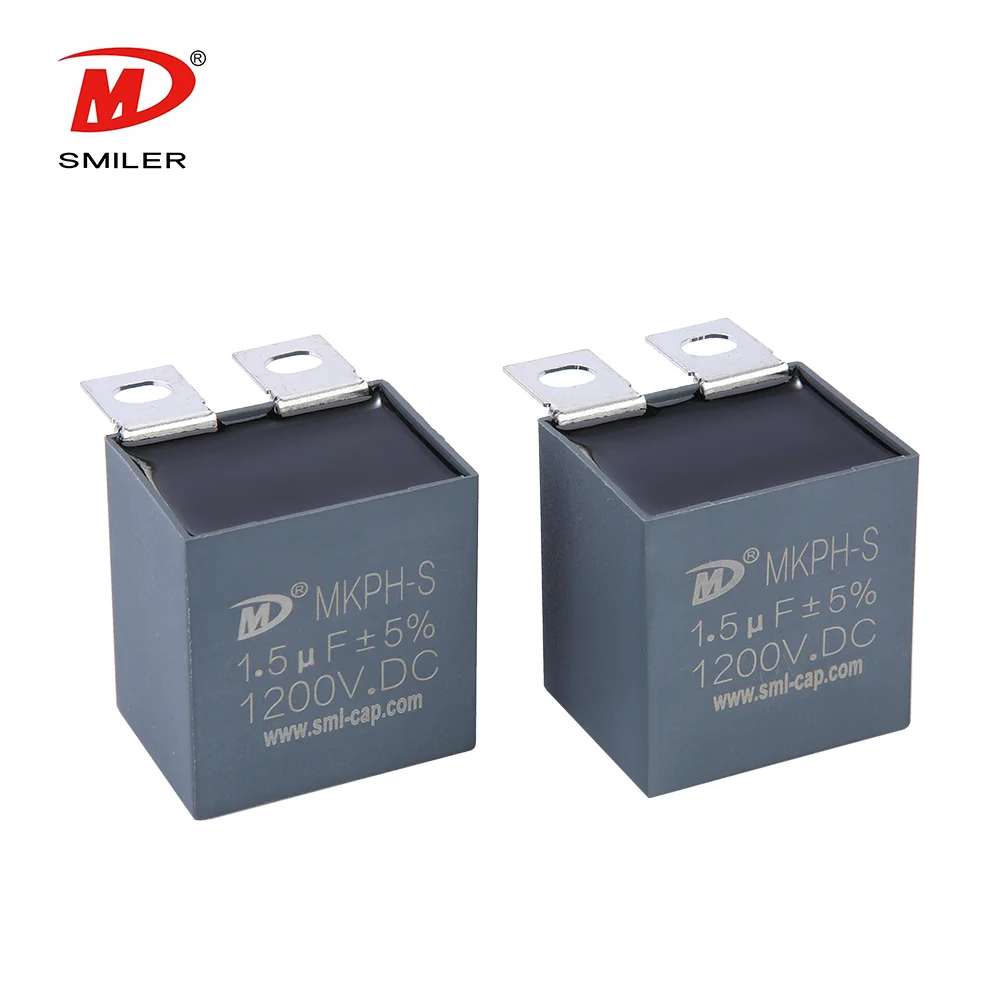
Understanding DC Capacitance to Prevent Converter Oscillations
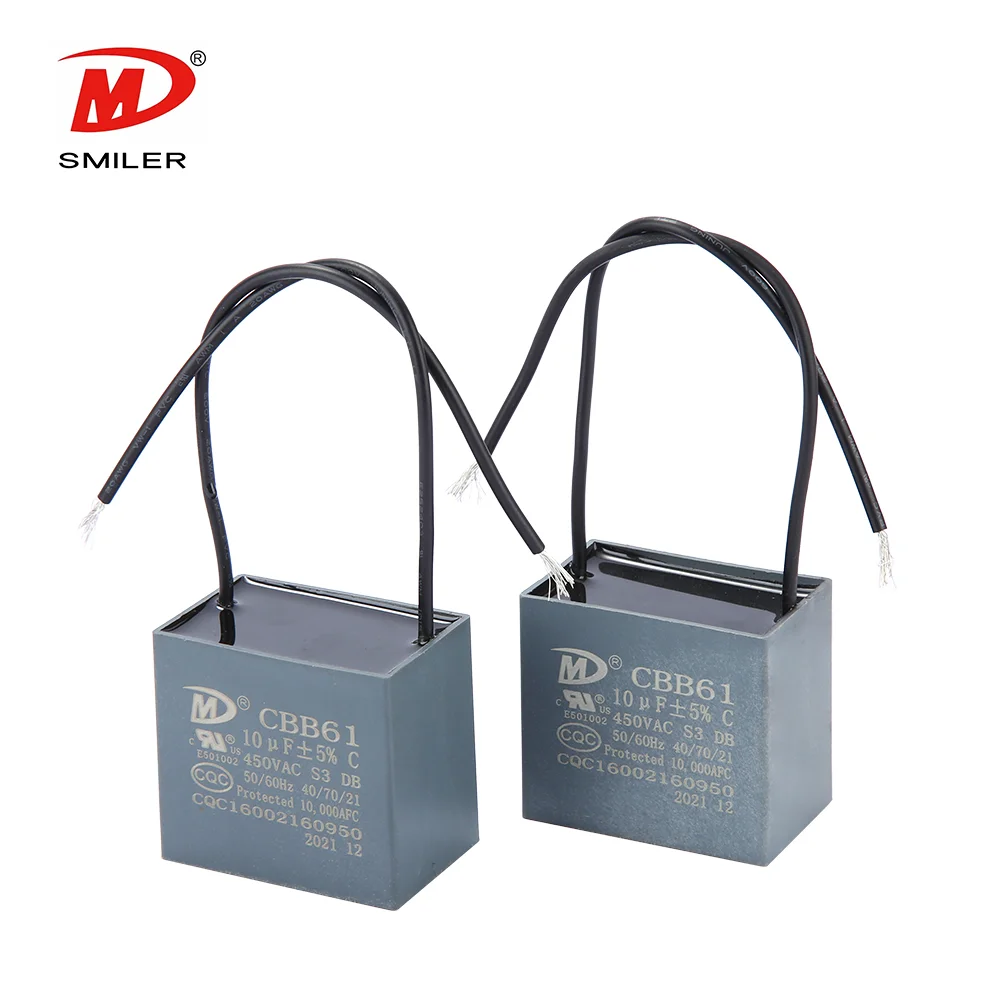
What Does a CBB61 Fan Capacitor Do? Exploring the Role of CBB61 Fan Capacitors


 Add
Building 12,Huazhi Technology Innovation Center,28 Sanle East Road,Beijiao,Foshan,Guangdong,China
Add
Building 12,Huazhi Technology Innovation Center,28 Sanle East Road,Beijiao,Foshan,Guangdong,China
 Phone
+86 18007576965 / 0757-22391591
Phone
+86 18007576965 / 0757-22391591
 Email
ari@sml-cap.cn
Email
ari@sml-cap.cn



