

Yes. An incorrect ceiling fan capacitor rating can harm a motor over time. A mismatched capacitor can lower starting torque. It can change winding current. This increases motor temperature. It makes speed unstable. It also reduces insulation life. Many replacement mistakes happen because the new capacitor looks similar. It costs less. Or it has a bigger number on the label. Careful matching prevents a repair from creating a new electrical fault.
Capacitance, shown as uF or MFD, affects the phase shift between motor windings. That relationship helps the fan start and run with useful torque. If the value is too low, the motor may hum or start slowly. If it is too high, the auxiliary winding may carry excess current.
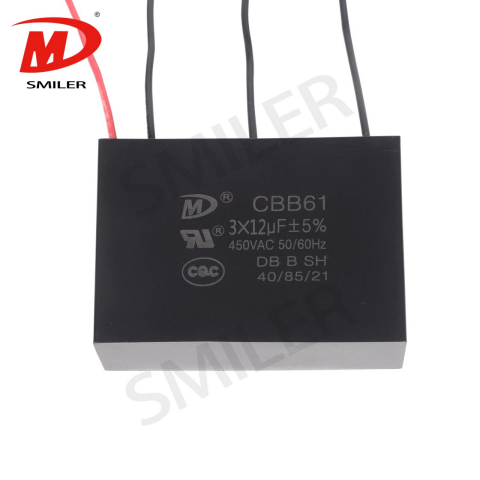
The voltage rating is the maximum operating voltage the capacitor is built to withstand. It is not a speed rating and it does not change the uF value. Using a lower ceiling fan capacitor voltage rating reduces safety margin. For capacitor replacement safety, match capacitance first, then use the same or a higher suitable VAC rating only if size, duty, wiring, and capacitor type are correct.
Tolerance shows how far real capacitance may vary from the printed value. Excessive deviation can affect starting torque, speed stability, and heating, so tolerance should be checked with capacitance and voltage.
One common mistake is installing a higher uF value because it seems like more power. Extra capacitance changes the phase angle and can increase auxiliary-winding current. The fan may appear stronger at first, but the motor can run hotter, vibrate more, and age faster.
A lower uF value is not a harmless cost-saving choice. Too little capacitance can leave the motor without enough starting torque. The fan may need a push, rotate slowly, or stall under normal load.
Selecting a lower voltage rating is another risky shortcut. The capacitor may break down electrically, fail early, or become unstable under line-voltage variation. A higher voltage rating may be acceptable only when capacitance, duty, temperature rating, dimensions, and wiring still match the fan.
Multi-speed ceiling fans may use several capacitance values in one case. The label may show separate uF sections, a common wire, and different speed leads. Replacing that part with the wrong configuration can connect the wrong winding path.
An incorrect capacitance value affects the current that passes through the windings of the motor. More energy might be converted to heat due to too little or too much phase shift. If the case is unusually warm, the fan smells burnt, or the breaker pops, do not use the fan.
Low torque is the clearest symptom of an under-rated or degraded capacitor. The fan may rotate slowly, fail to start on low speed, or run inconsistently between speed settings. These symptoms are strong reasons to compare the installed part with the original rating and the fan manufacturer's requirement.
Wrong capacitor ratings can make the motor run unbalanced. The result may be humming, buzzing, vibration, or speed hunting. Over time, the combined electrical and mechanical stress can shorten motor lifetime.
Watch for slow starting, a fan that needs a manual push, unexpected speed changes, excessive motor heat, louder humming, vibration, or repeated capacitor failure. A swollen, cracked, leaking, or burned capacitor should be replaced only after the original rating and wiring are confirmed.
Read the old capacitor label before disconnecting anything. Record each uF value, voltage rating, tolerance, frequency marking, capacitor type, wire count, and terminal layout. Photograph the wiring and note the common lead. For the selection side of the topic, see how to choose the correct ceiling fan capacitor uF value. This article focuses on why wrong ratings create motor problems.
A capacitance meter or multimeter with capacitance mode can help. It shows whether the measured value is close to the rated value. Disconnect power first. Discharge the capacitor safely. Isolate it before measuring. A good reading does not rule out wiring errors. It does not rule out switch faults, bearing drag, or winding damage.
Do not randomly increase or decrease uF value. Match each original capacitance section and use the fan manufacturer's specification when the label is unclear.
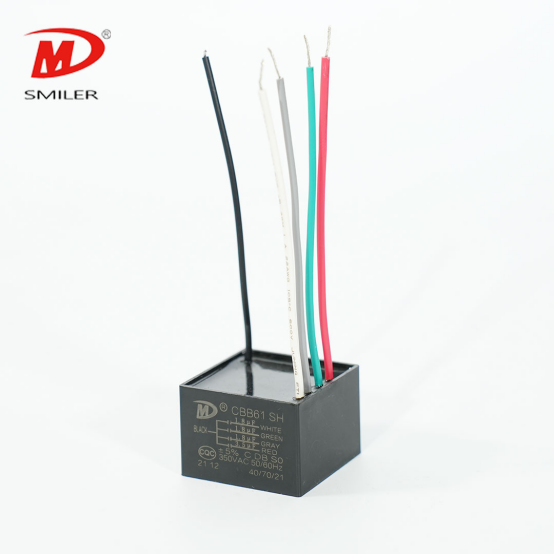
Select an equal or higher proper voltage rating. Never use a lower one. For CBB61 AC motor capacitors, the listed range is 110-600 VAC at 50/60 Hz. It includes +/-5% (J) or +/-10% (K) capacitance tolerance. The specific value must match the original fan requirement. Also take into account the operating temperature. Examine the enclosure space and the airflow. Determine if the capacitor is designed for continuous AC motor starting and running duty.
For fan and single-phase AC motor applications, SMILER capacitor provides the CBB61 capacitor, which uses metallized polypropylene film, a flame-retardant plastic shell, and resin filling. Listed characteristics include low loss, low internal temperature rise, high reliability, self-healing property, and long lifetime. The CBB61 family is specified for starting and running single-phase motors on 50/60 Hz AC, including fans, ventilators, air purifiers, and other AC motors. Its listed range includes 110-600 VAC, +/-5% (J) or +/-10% (K) tolerance, and 0.40-12 uF options, with dimensions varying by capacitance and rated voltage.
Metallized polypropylene film capacitors are used in AC motor capacitor designs because they can provide stable performance with low losses. In the CBB61 construction, self-healing behavior helps isolate small dielectric faults. Low internal temperature rise also supports capacitor and motor reliability.
Ceiling fans are only one use case for AC motor capacitors. Similar reliability questions appear in ventilation equipment, household appliances, air purifiers, and other single-phase AC motors. Within the broader motor-capacitor range, CBB60 is also specified for starting and running single-phase 50/60 Hz motors, while CBB65 includes fans and other appliances among its applications. SMILER capacitor has over 15 years of film capacitor expertise, and our automated production lines are designed for efficiency, precision, consistency, and quality control. Customization with low MOQ is available, but it does not replace checking the fan's original rating. Buyers comparing AC motor capacitor product categories should still match the original motor requirement.
A: Yes. A wrong rating can reduce starting torque, increase winding current, raise motor temperature, cause unstable speed, and shorten motor life. The risk grows with repeated use.
A: A higher uF value can increase auxiliary-winding current and change the motor phase angle. The fan may run hotter, make more noise, vibrate, or stress the windings. It should not be used as a speed upgrade.
A: A lower uF value can reduce starting torque. The fan may hum, start slowly, need a push, run below normal speed, or stall. Repeated weak starts can increase heating.
A: Often yes, if capacitance, capacitor type, frequency suitability, temperature rating, wiring, terminals, and physical size are all correct. A lower voltage rating reduces safety margin.
A: Read the original label and record the uF value, voltage rating, tolerance, frequency, wire count, terminal layout, and capacitor type. A capacitance meter can compare measured and rated values after safe disconnection and discharge.
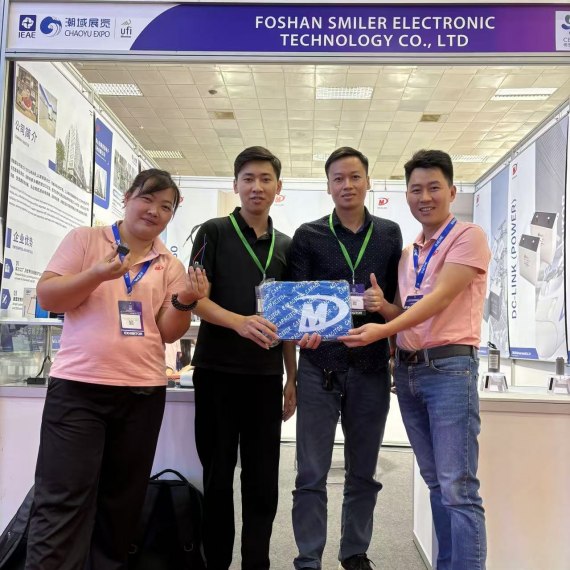
2024 VIETNAM INTERNATIONAL ELECTRONICS & SMART APPLIANCES EXPO
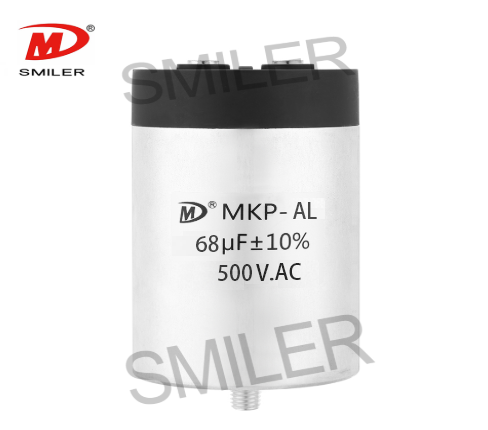
Exploring How AC Capacitors and DC Capacitors Function Differently
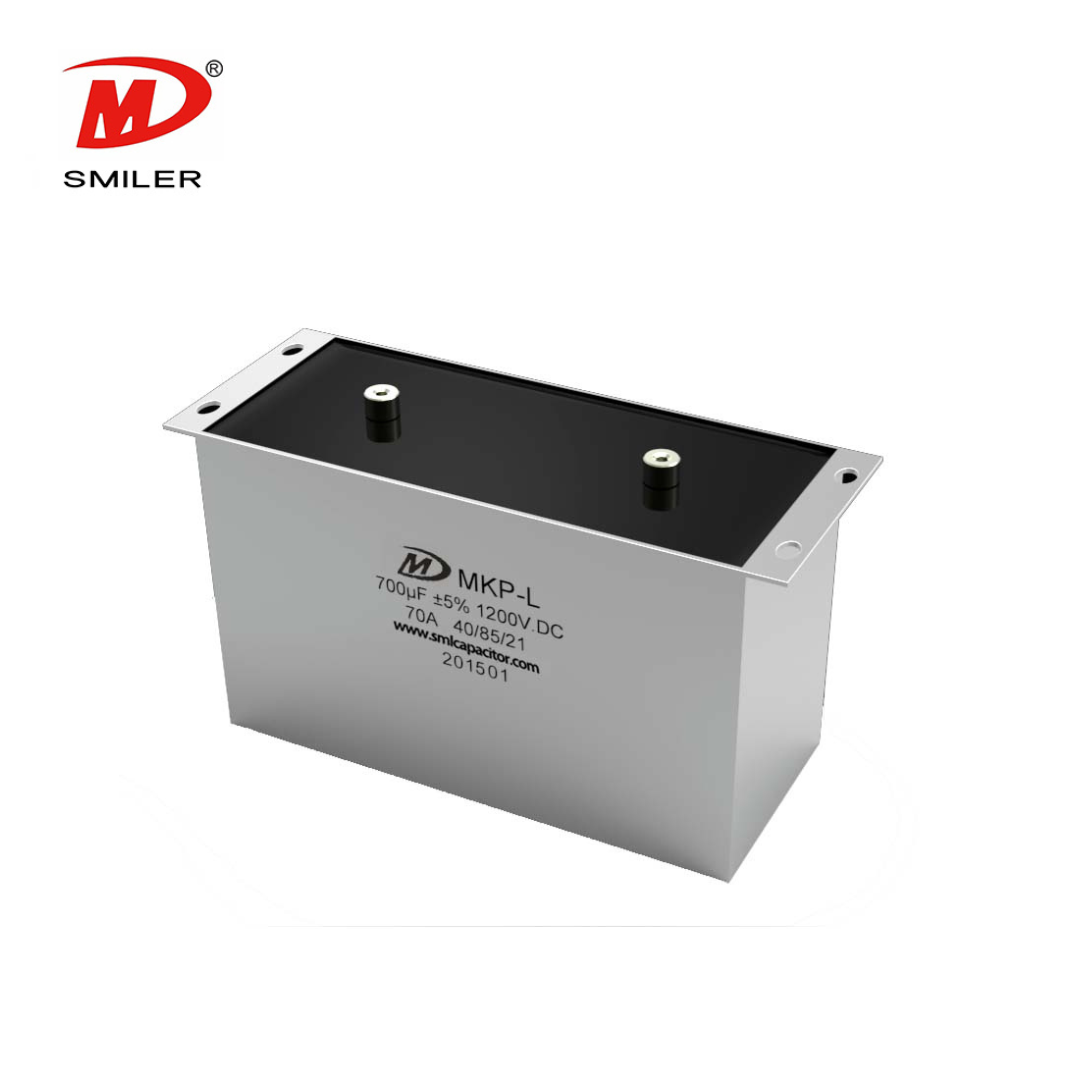
Understanding DC Capacitance to Prevent Converter Oscillations
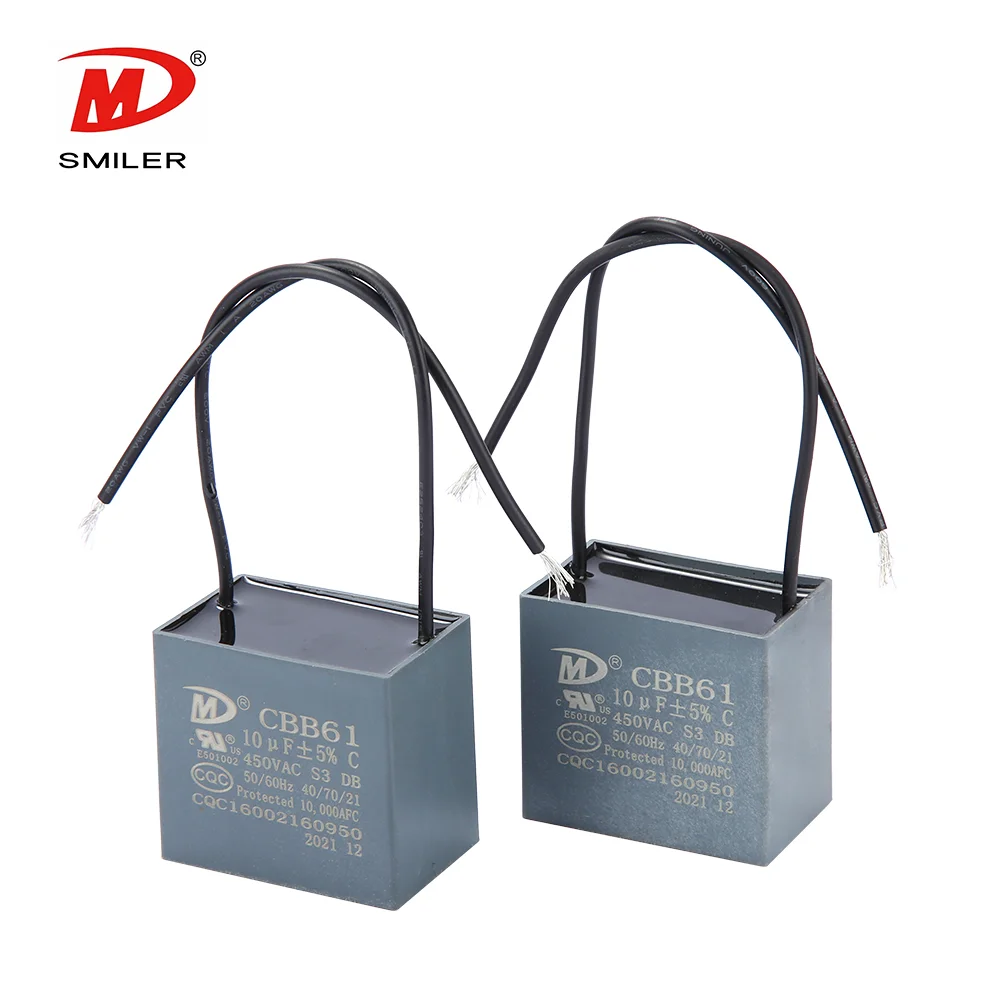
What Does a CBB61 Fan Capacitor Do? Exploring the Role of CBB61 Fan Capacitors
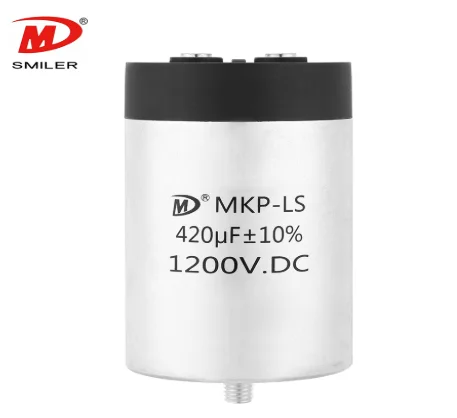
Mastering AC to DC Rectifier with Capacitor Techniques


 Add
Building 12,Huazhi Technology Innovation Center,28 Sanle East Road,Beijiao,Foshan,Guangdong,China
Add
Building 12,Huazhi Technology Innovation Center,28 Sanle East Road,Beijiao,Foshan,Guangdong,China
 Phone
+86 18007576965 / 0757-22391591
Phone
+86 18007576965 / 0757-22391591
 Email
ari@sml-cap.cn
Email
ari@sml-cap.cn



