

Yes, a faulty AC condenser capacitor can stop an outdoor unit. It can also reduce cooling. It helps produce starting torque. It supports the compressor and condenser fan motors. When capacitance drifts, the system may hum. It may leave the fan stationary. Or it may cool poorly. These symptoms can have other causes. So check the capacitor against the original requirements.
An outdoor condenser depends on the compressor, fan motor, controls, and electrical connections. They must work together. A weak capacitor can interrupt starting. This can happen even when the thermostat and indoor blower appear normal. The compressor may not start. The fan may lose torque. Heat may not leave the outdoor coil.
In a single-phase AC motor, the capacitor creates a phase shift between winding currents. That relationship produces starting torque. In an AC condenser, this support may be needed by the compressor motor, the fan motor, or both.
A run capacitor remains active during operation. It helps maintain the phase relationship and supports smoother, more efficient running. Some condensers use a dual run capacitor; others use separate components.
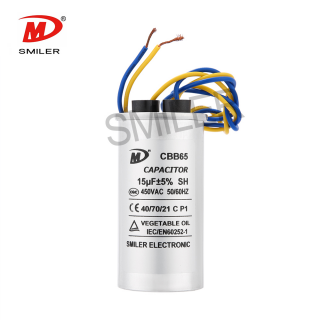
A humming condenser usually indicates that a motor receives power. Yet the motor does not have enough starting torque. The compressor may attempt to start. However, it remains stationary. A failed capacitor is one possible cause. Still, a locked compressor, low voltage, or a wiring fault can produce a similar sound.
Avoid cycling the thermostat repeatedly to force a start. Turn the system off instead. Then have the capacitor, supply voltage, compressor circuit, and motor checked.
A weak capacitor may not provide sufficient torque for the condenser fan. The fan can start slowly, stop after warming up, or run only after a manual push. A stationary fan cannot reject heat normally.
Never reach into a live condenser or spin the blade while power is connected. A technician should isolate power, discharge the capacitor safely, and test the fan circuit. The fan motor, contactor, control board, or mechanical friction can also be responsible. See this AC condenser capacitor failure guide for related symptoms.
An intermittent capacitor may work while cool and lose capacitance as temperature rises. The compressor or fan then struggles, and a thermal or electrical protection device may shut the system down. After cooling, the unit may restart briefly and appear normal.
The outdoor capacitor is exposed to summer heat, solar loading, restricted airflow, and nearby component heat. High temperature accelerates aging and can increase capacitance drift. A dirty coil or blocked cabinet makes the environment hotter.
Voltage spikes, switching events, and unstable supply conditions place dielectric stress on a capacitor. An insufficient voltage rating reduces operating margin and may lead to early breakdown. Loose terminals can create local heating or arcing.
A higher VAC rating does not authorize a different capacitance value. It is acceptable only when the other specifications and physical fit remain suitable for the original equipment.
With age, a capacitor can lose capacitance or develop internal faults. The motor receives less phase-shift support, so startup becomes weaker and operation may become inconsistent.
After power is safely isolated, inspect for swelling, leakage, a split case, burned terminals, corrosion, or an unusual smell. A capacitor can still be electrically weak when its case looks normal, so visual inspection is only a screening step.
A capacitance meter or multimeter with capacitance mode can compare the measured microfarad (uF) value with the label. Disconnect, safely discharge, and isolate the component before measurement. Test each section separately when multiple values are present.
Also check rated voltage, tolerance, frequency, type, terminals, temperature suitability, and dimensions. A reading near the label does not rule out a wiring or motor problem.
There is no universal AC condenser capacitor value. Follow the original unit label, service data, and motor requirements. CBB65 is a relevant AC motor capacitor family for fans and appliances, but its name alone does not prove compatibility with a particular condenser.
Confirm capacitance, voltage, tolerance, frequency, duty, terminals, and available space. If any detail is unclear, verify the equipment requirements before installation.
The capacitor experiences electrical and thermal stress during the cooling season. Unstable capacitance can make a motor operate outside its intended condition, while internal heating accelerates deterioration. Suitable ratings support stable starting and running, but cannot correct an overloaded compressor, poor airflow, incorrect wiring, or a defective control.
SMILER capacitor provides CBB61 capacitor solutions for listed fan and other single-phase AC motor applications. The CBB61 construction uses metallized polypropylene film, a flame-retardant plastic shell, and resin filling. Listed features include low loss, low internal temperature rise, high reliability, self-healing property, and long lifetime. Applications include fans, ventilators, air purifiers, and other AC motors.
For CBB61, the listed range is 110-600 VAC at 50/60 Hz, with +/-5% (J) or +/-10% (K) tolerance and 0.40-12 uF options; dimensions vary by capacitance and rated voltage.
Start with specification matching. Use the original uF value and suitable voltage, confirm wiring and terminals, and consider outdoor heat. Do not increase capacitance to make a motor “stronger,” or reduce it to save money.
SMILER capacitor has over 15 years of film capacitor expertise. We offer customization with low MOQ, and our automated production lines are designed for efficiency, precision, consistency, and quality control. The final part still has to match the condenser specifications.
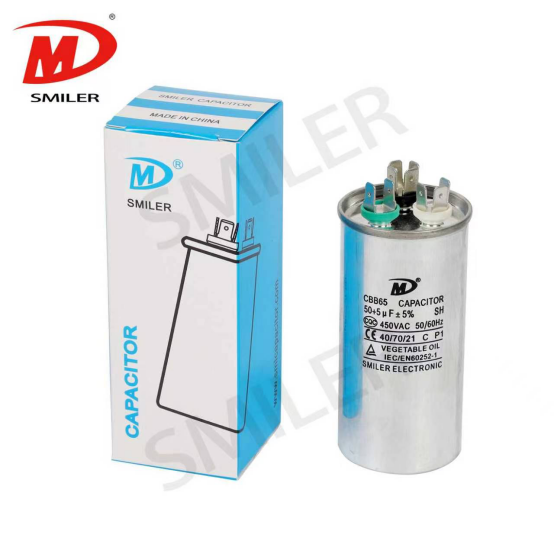
The same starting and running principles appear in fans, ventilators, air purifiers, and other single-phase AC motor equipment. Correct capacitance, voltage, tolerance, wiring, and operating conditions remain important.
This broader range helps buyers compare construction; it does not make one model suitable for every machine. A fan or appliance capacitor should not be transferred to a condenser without checking the receiving equipment's requirements. See the AC motor capacitor product categories for related families.
The CBB65 capacitor is one family to evaluate for relevant AC motor and appliance applications. The choice remains application-specific, so review the original equipment label before purchase.
CBB60 is also specified for starting and running single-phase 50/60 Hz motors, making it another related motor-capacitor family to compare without treating it as a universal substitute.
A: A failed capacitor may not provide the phase shift and starting torque required by the compressor or condenser fan. The motor may hum, fail to start, overheat, or shut down. Other faults can produce similar symptoms.
A: It can increase risk through repeated failed starts, abnormal current, or excessive heat. This does not prove compressor damage, so test both the capacitor and compressor circuit.
A: There is no universal service life. Heat, voltage stress, duty, component quality, connections, and motor load all affect aging. Repeated failure should prompt an inspection.
A: Do not change capacitance without verified equipment requirements. A different or higher voltage rating may be acceptable only when the remaining electrical, temperature, wiring, and fit requirements are suitable.
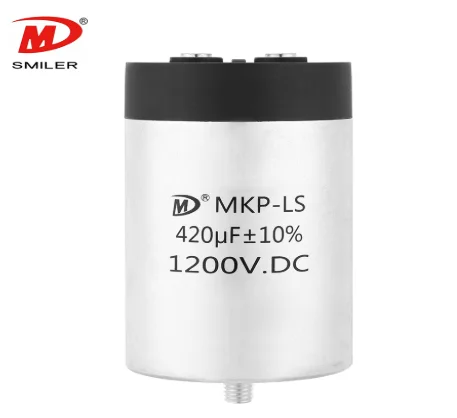
Mastering AC to DC Rectifier with Capacitor Techniques
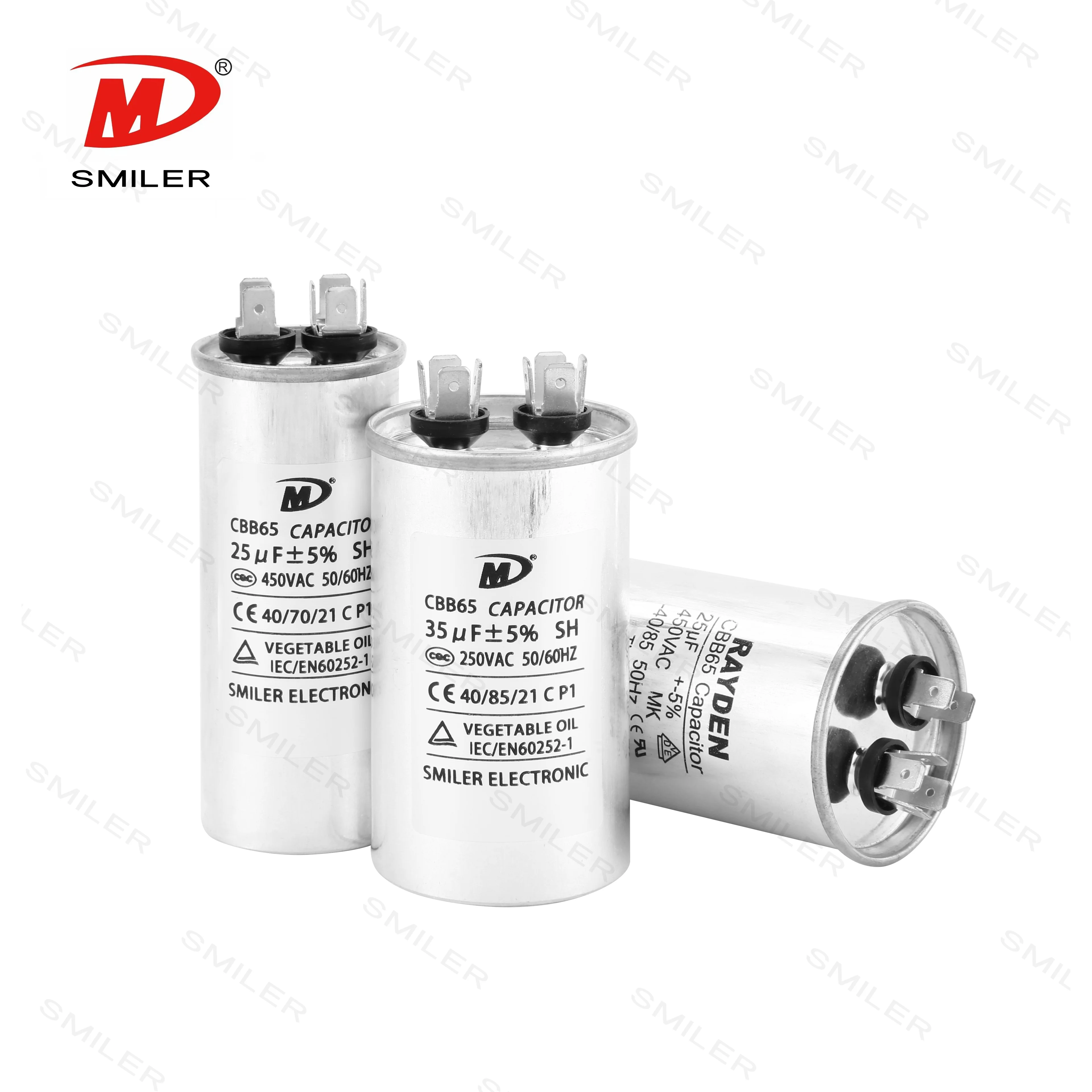
CBB65 250VAC Capacitor Explained: What Every Professional Should Know
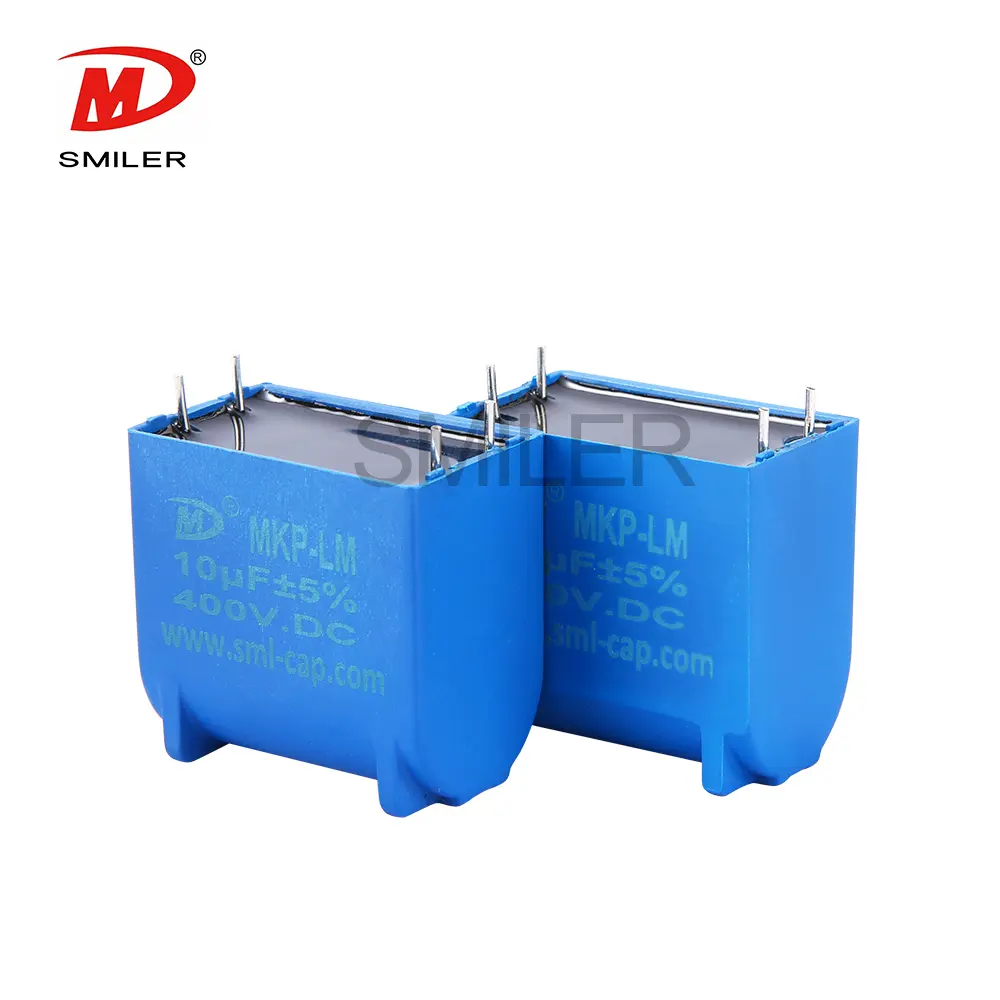
What Should You Know About Filter Capacitor Replacement in Electronics?
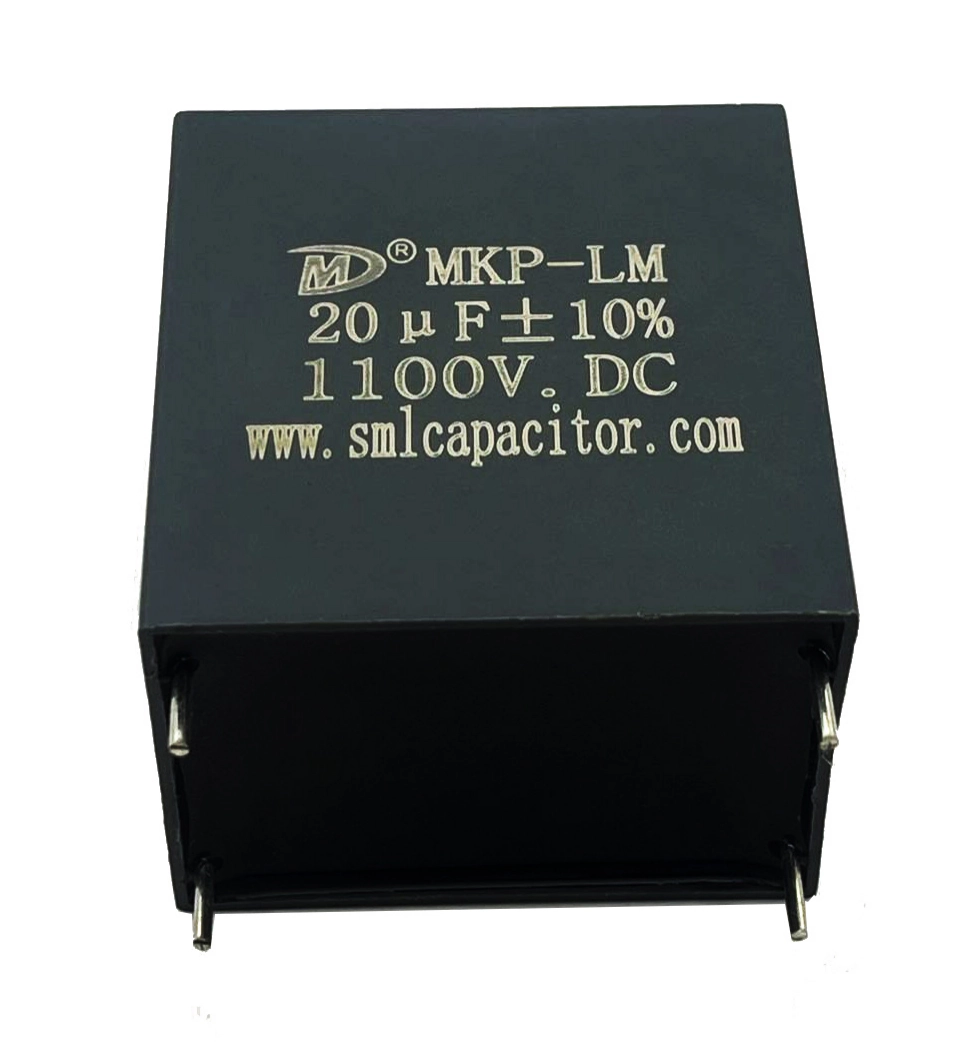
Understanding the Use of DC Link Capacitor in Inverter Design for EVs
How to Choose the Best Bus Capacitor for Your EV Inverter Needs


 Add
Building 12,Huazhi Technology Innovation Center,28 Sanle East Road,Beijiao,Foshan,Guangdong,China
Add
Building 12,Huazhi Technology Innovation Center,28 Sanle East Road,Beijiao,Foshan,Guangdong,China
 Phone
+86 18007576965 / 0757-22391591
Phone
+86 18007576965 / 0757-22391591
 Email
ari@sml-cap.cn
Email
ari@sml-cap.cn



