

A DC-link capacitor helps keep the DC bus steady in energy storage system designs. It sits between the battery path and the inverter bridge. It takes in ripple current. It limits voltage fluctuation. It supports transient power exchange. It reduces stress on switching devices. Correct sizing is a reliability decision. It is not only a capacitance calculation.
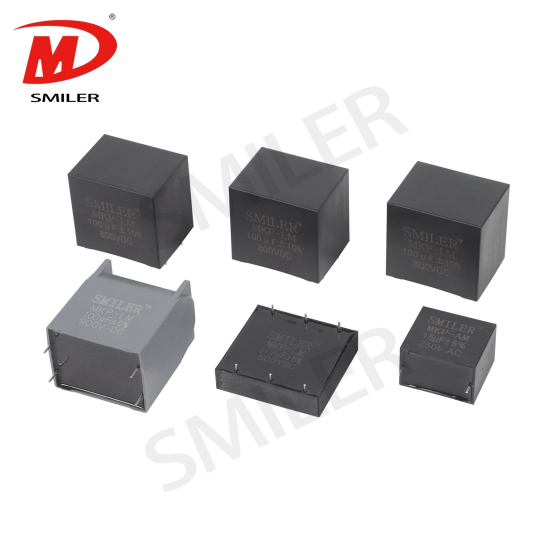
In a BESS inverter, the DC link buffers the battery energy path. It also buffers the AC output stage. In commercial and industrial energy storage inverter applications, the DC-link capacitor is listed for DC filtering and smoothing. The listed product is the MKP-LM Series. The approved capacitance range is 1 uF to 170 uF. The approved voltage range is 450 VDC to 1200 VDC. Engineers reviewing a DC-Link Capacitor product family should match those ratings to real bus voltage. They should consider ripple current. They should also consider cabinet temperature.
Energy storage inverters often switch between charge, discharge, standby recovery, and grid support. These changes create ripple and voltage shifts on the DC bus. A high-performance BESS DC-link capacitor must combine capacitance. It needs RMS ripple current capability. It requires low ESR. It needs low inductance. It needs voltage margin. It also needs thermal stability. Nominal-load checks alone may miss daily high-current cycling stress.
Start with DC bus voltage range. Look at rated inverter power. Consider peak overload. Check switching frequency. Review modulation strategy. Note allowable voltage ripple. Think about cooling method. Consider ambient temperature. And include lifetime target. The current waveform matters. Capacitor heating comes from RMS ripple current. Size against worst operating corners. These include low battery voltage with high discharge power. They also include high bus voltage during regeneration.
Voltage ripple comes from charge that moves in and out of the capacitor. This happens during switching and load changes. Lower capacitance usually increases ripple. Higher capacitance reduces ripple. But it adds size, cost, and inrush concerns. Set allowable ripple from the semiconductor voltage rating. Consider control tolerance. Look at converter limits. And review grid-support behavior. If the target is too loose, the inverter loses voltage margin.
The basic calculation links capacitance to ripple current and allowable voltage ripple. For transient checks, use stored energy across the permitted DC bus window. The medium/high-voltage variable frequency drive application scenario lists DC-link capacitor use for DC filtering and smoothing. The listed product is the MKP-LL Series. The revised capacitance range is 10 uF to 5000 uF. The revised voltage range is 600 VDC to 7000 VDC. This wider range helps when a design needs higher bus voltage. It also helps when more capacitance is needed than compact PCB-mounted parts provide.
Ripple current creates heat through ESR. So the RMS value must be checked at the actual cabinet temperature. Power Capacitor DC Link Capacitor MKP-LS is a DC-filter capacitor, a dry-type product. Its construction uses metallized polypropylene film. It has a plastic-shell or Mylar-tape housing. It uses resin filling rated UL94 V-0. Published features include low self-inductance. They include low equivalent series resistance. They have good heat dissipation. They use tinned-copper terminals. They have current-impact capability. These facts matter in high-frequency, high-current inverter conditions.
ESR turns ripple current into internal loss. Higher hot-spot temperature speeds up aging. It reduces lifetime margin. In dense BESS inverter cabinets, check airflow. Review busbar layout. Look at capacitor spacing. Check terminal temperature. And note nearby heat sources. SMILER capacitor has over 15 years of expertise in film capacitors. Approved company facts include customization availability with low MOQ. They have automated production lines designed for efficiency, precision, consistency, and quality control. Our engineering discussion should connect capacitance, terminals, ripple current, and thermal limits before final selection.
Choose the voltage rating from the maximum continuous DC bus voltage. Then add margin for charging tolerance. Add margin for switching overshoot. Add margin for grid events. And add margin for transient recovery. Do not size only to nominal battery voltage. The MKP-LM Series range can cover 450 VDC to 1200 VDC in commercial and industrial energy storage inverter applications. MKP-LL Series application data covers 600 VDC to 7000 VDC in medium/high-voltage inverter scenarios. The correct rating depends on architecture. It depends on insulation. It depends on series or parallel layout. And it depends on verified ripple-current duty.
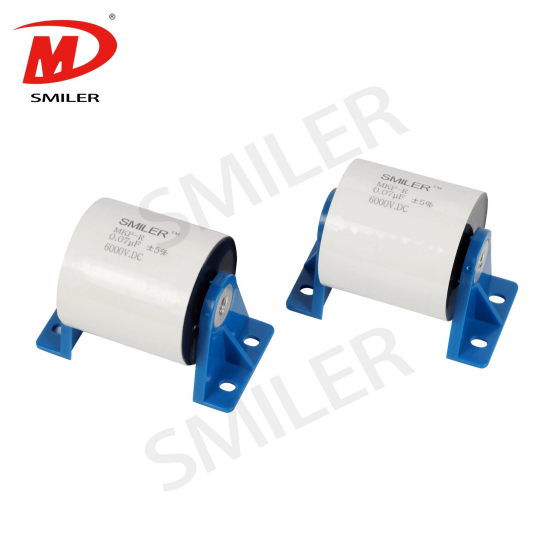
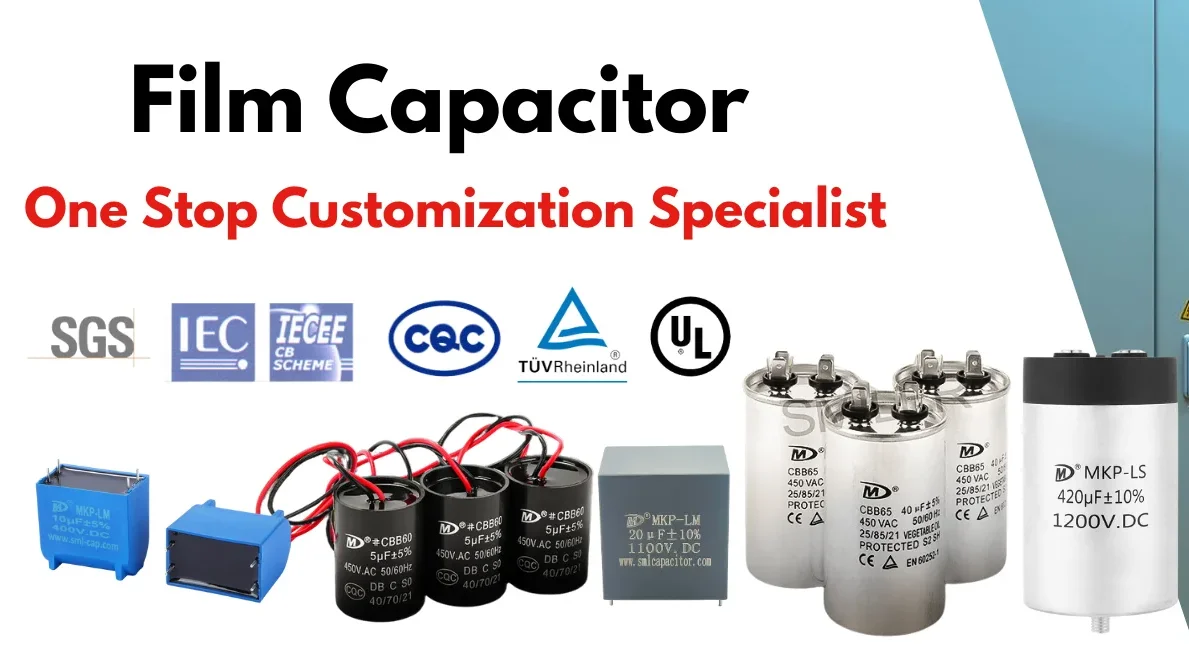
Film DC-link capacitors are often selected where ripple current, long service life, and low losses matter more than maximum capacitance density. SMILER capacitor DC-Link Capacitor products are used in DC-Link circuits. They can replace electrolytic capacitors in suitable designs. The DC-Link product family uses metallized polypropylene film. Approved feature claims include low ESR. They have high ripple current handling capability. They offer low self-inductance. They have a self-healing property. They provide a long lifetime. A product such as Power Capacitor DC Link Capacitor MKP-LM is relevant when the design needs a film DC-link capacitor for inverter DC bus capacitor selection.
Electrolytic capacitors can offer high capacitance density. Film capacitors usually provide stronger ripple-current capability. They have lower ESR. They show better high-frequency behavior. They allow longer maintenance intervals. But they may need a larger footprint. The better option depends on capacitance. It depends on RMS ripple current. It depends on hot-spot temperature. It depends on the lifetime model. It depends on busbar inductance. It depends on replacement strategy. And it depends on measured inverter stress.
Common failure drivers include excessive ripple current. High temperature is another cause. Overvoltage stress can lead to failure. Poor cooling is a factor. Loose terminals matter. High-inductance layout is important. Aging beyond the mission profile also causes failure. Power Capacitor DC Link Capacitor MKP-LS product facts include 1.5 times rated-voltage terminal testing for 10 seconds. They include 3000 VAC terminal-to-case testing. They have 50000 hours at rated voltage and 85 C. And they have a 1000-hour biased-humidity test at 60 C and 95% RH with rated voltage. Treat these as component data. They are not a BESS lifetime guarantee.
Build margin into voltage. Do the same for RMS ripple current. Include thermal rise as well. Keep the busbar loop short. Control hot spots. Avoid blocked airflow. Verify terminal temperature at worst-case cycling. Approved product and application facts must remain conditional on the real design stress profile. Compare calculated capacitance. Look at allowable voltage ripple. Check transient voltage. Review peak current. Examine RMS ripple current. Check temperature rise. Review mounting loop length. Check insulation coordination. And complete validation before locking the BOM.
A practical DC-Link Capacitor sizing workflow starts by defining minimum, nominal, and maximum DC bus voltage. Then set the allowed ripple voltage at the inverter terminals. Next, calculate required capacitance. Evaluate RMS ripple current capability. Check ESR and thermal rise. Confirm lifetime at real ambient temperature.
After the electrical fit is clear, review package type. Check terminal style. Look at busbar layout. Check insulation distance. Review cooling path. And consider service plan. Power Capacitor DC Link Capacitor MKP-LL is a dry-type aluminum-case DC link capacitor used in DC-Link circuits, renewable energies, industrial drives, and traction applications. Its page lists a voltage of 600 VDC to 4000 VDC and a rated capacitance of 24 uF to 5600 uF. This makes Power Capacitor DC Link Capacitor MKP-LL relevant for high-capacitance DC bus options.
A: It smooths the DC bus. It absorbs ripple current. It supports transient energy exchange. It helps protect inverter power devices from voltage fluctuations.
A: Use bus voltage, ripple-current waveform, switching frequency, allowable voltage ripple, and transient energy demand. Then verify RMS ripple current, ESR heating, voltage rating, and lifetime.
A: It should exceed the worst-case RMS ripple current under the actual operating profile, temperature, cooling, and switching conditions.
A: They can provide low ESR. They offer high ripple-current capability. They have low inductance. They show self-healing behavior. And they give a long service life in demanding inverter environments.
A: Lifetime depends on voltage stress, ripple current, hot-spot temperature, cooling, and mission profile. Supplier lifetime data must be checked against the actual inverter conditions
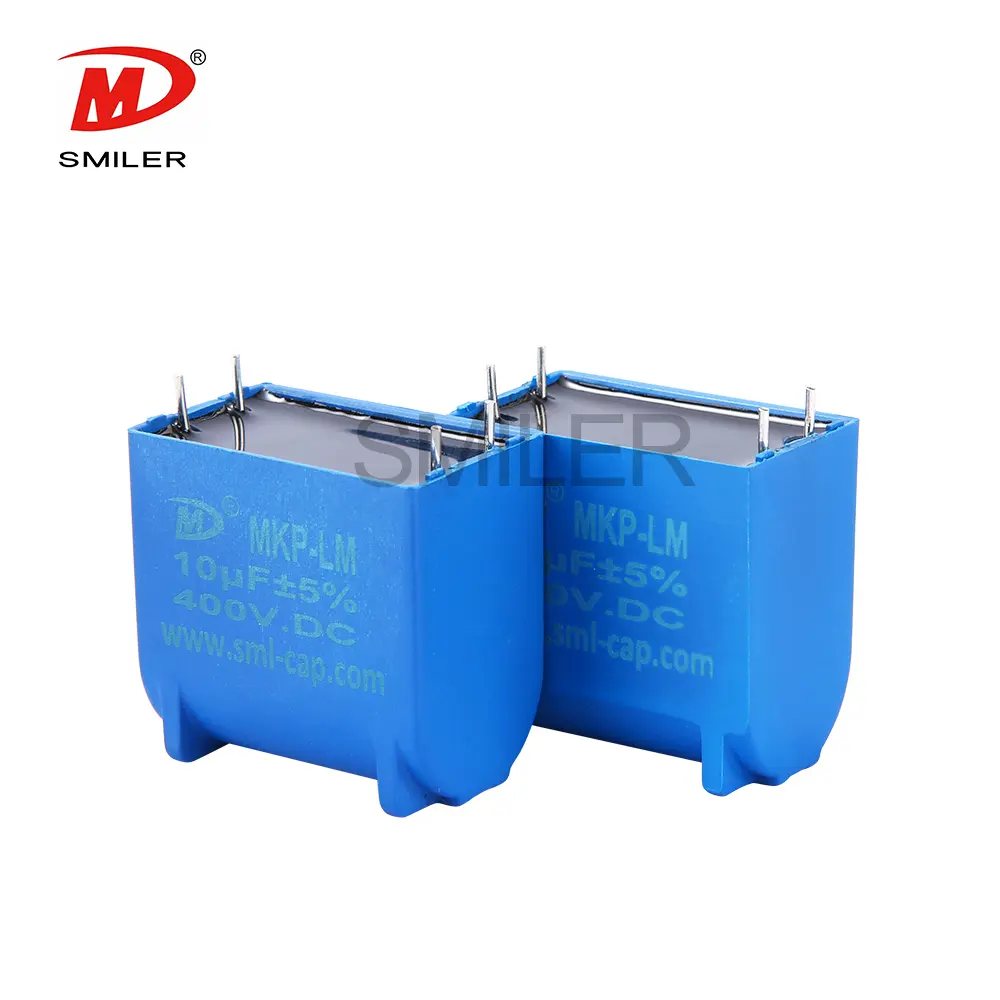
Choosing the Right Filter Capacitor for Induction Cooker: An In-Depth Guide
Capacitor Voltage Regulator: Unveiling Hidden Drawbacks
How to Accurately Calculate AC Circuit Capacitor Impedance
AC to DC Filter Circuit Design: Essential Considerations for Experts
How Do Capacitors Improve Efficiency in Medium Voltage Inverters?


 Add
Building 12,Huazhi Technology Innovation Center,28 Sanle East Road,Beijiao,Foshan,Guangdong,China
Add
Building 12,Huazhi Technology Innovation Center,28 Sanle East Road,Beijiao,Foshan,Guangdong,China
 Phone
+86 18007576965 / 0757-22391591
Phone
+86 18007576965 / 0757-22391591
 Email
ari@sml-cap.cn
Email
ari@sml-cap.cn



